In From the Cold Art Therapy With Homeless Men
T wo armchairs are facing each other in the Whitworth art gallery in Manchester. Denise Harrison, a mental wellness blogger with past feel of homelessness, is sitting in one of them, waiting for questions.
A member of the public sits downwardly opposite her, and tentatively asks if she thinks it's OK to give money to people on the street, as charities discourage it. "It's down to personal option – you shouldn't feel bad if you lot practice or if don't," replies Harrison. "Some worry information technology's enabling addictions, but it's also providing someone with the option to pay for shelter. On the street, someone can terminate upwards with several gratuitous McDonald'due south burgers but nowhere to slumber that night."
The questioner, reasonably satisfied, leaves, and another sits downwards with the next question on homelessness for Harrison. The dialogues are part of a performance artwork called Are You Sitting Comfortably? by the artist Emma Turner, who felt the public were becoming inured to homelessness in Manchester. The official number of rough sleepers was 278 in 2017, a 41% increment on the previous twelvemonth, but the truthful number of its homeless people – counting those in temporary adaptation – is likely to be much higher.

As Harrison says of her time suffering with booze addiction and sofa surfing after the breakdown of her spousal relationship: "It's scary how quickly a state of affairs that was so abnormal became normal, my new normal. It can happen to anyone."
The work was part of the inaugural International Arts and Homelessness Festival and Top, running 12-18 November, which explored a potentially contentious idea: the office of arts and civilization in tackling homelessness.
Manchester was called for the issue because the city quango's homelessness strategy for the side by side five years explicitly includes a commitment to increasing admission to arts, and considering of how the city's cultural sector has stepped forward to provide support for the council's plan. The strategy was born of crisis: homelessness has steadily crept upwardly in Manchester due to a lack of housing and cuts to social welfare.
"Funding to local government to help tackle homelessness was reduced, so for the start fourth dimension the city council said they couldn't solve it on their own – and we were there to offer a solution," Amanda Croome, master executive of the Booth Heart, a day facility for people who are homeless or at hazard, told the elevation.
Third sector organisations began working together to approach the council, consulting businesses, universities, cultural organisations and the faith sector, too every bit people with experience of homelessness. Their findings underpinned the new Manchester Homelessness Charter. The metropolis'due south goal was to get each person a home – but "there needed to exist holistic support", Croome said. Officials will now piece of work towards what is described as a jigsaw of homelessness support approaches, rather than focusing exclusively on immediate needs such equally shelter and healthcare. This includes the chance to encounter people, build skills and take fun.
"Yous tin't generalise about why people are homeless – there'south no one affair, then helping people to tell their ain story and gain confidence is part of recognising those individual needs," said Andy Burnham, mayor of Greater Manchester, whose entrada hinged on a promise to tackle homelessness. "It'southward the importance of providing the opportunity to reconnect with passions and dreams, and that is something nosotros've overlooked in the past."
Simply how would this arroyo work in practice when the crunch is so severe? Beth Knowles, an adviser on homelessness for the mayor's role, reiterated that the phone call for a more holistic arroyo came from homelessness services themselves – even frontline providers such every bit the night shelters.
"I've spoken to some well-nigh trialling the jigsaw approach," she said, "and while it might not seem the most immediate thing when you're trying to find beds, some see the value in mayhap having some singing or photography sessions on site, because it's worked well.
"Of course, non every council officeholder is going to see this as a priority. But to do something it doesn't accept to exist a priority. Information technology's role of a whole package. It's well-nigh what that individual needs and offering it."
Croome said: "Nosotros do a lot of work helping to get people in to accommodation. But we observe that if you put someone into a flat and they accept no support network, no interests and nothing to do, and then very ofttimes in six months they'll be back on the street. What the arts practise is give people a new perspective."
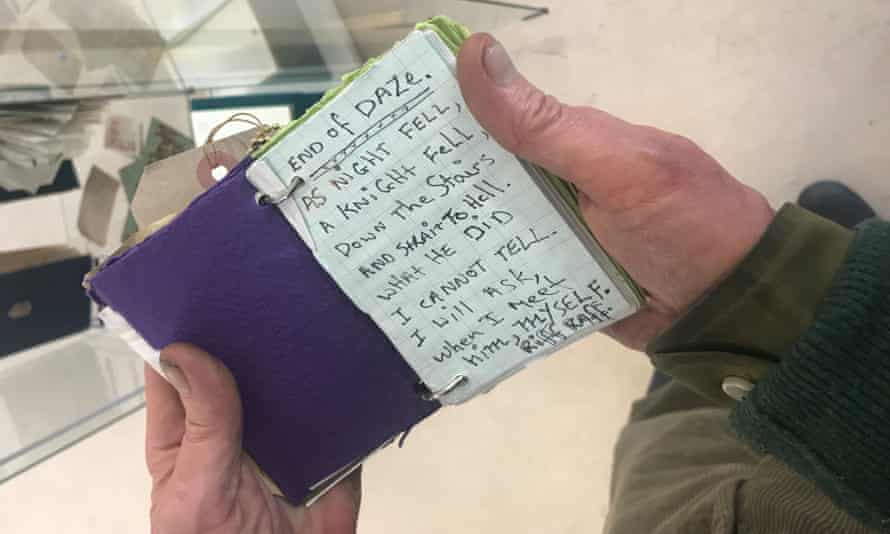
Lawrence McGill has become an gorging gardener since first becoming a regular visitor to the Booth Centre, filling salvaged containers with soil and seeds. He has likewise written poetry, and a song, Spinning Plates, about juggling life's hardships. "My life started the day I stepped into this place," he said. "Anybody has some genius, I think, and they assist bring it out."
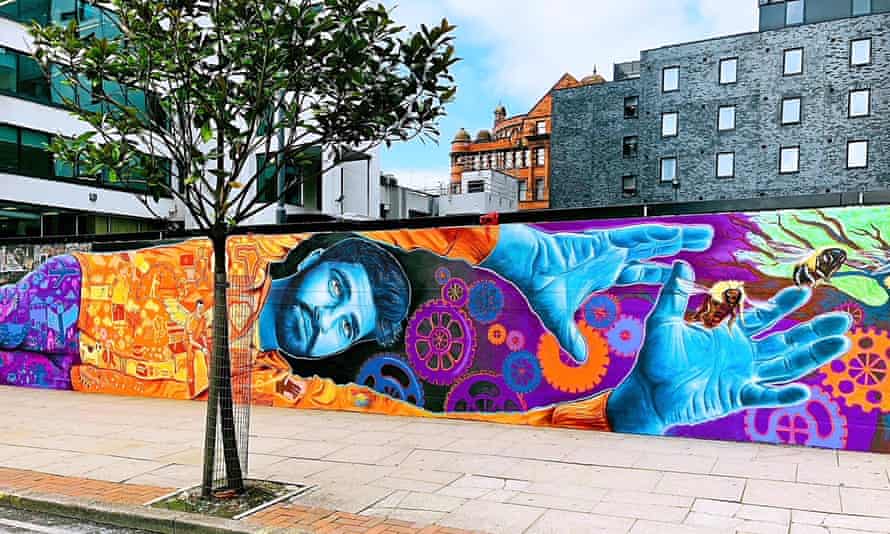
The charity With One Voice worked with the metropolis's galleries, theatres, cafes and other public spaces to exhibit the work of dozens of artists at the festival, many of whom had experience of homelessness. There was a new landscape painted by 40 homeless people on Ducie Street, and a photography exhibition at Piccadilly station of portraits of people who nourish the Booth Centre.
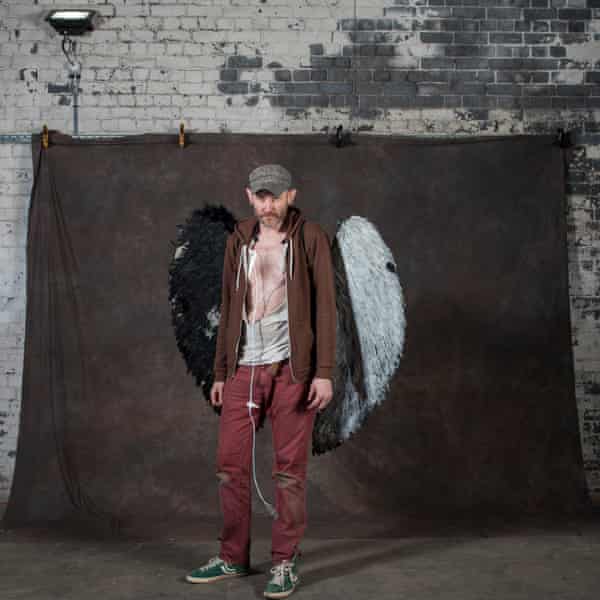
The festival concluded with an "immersive opera", Homo on Bench, produced past the arts organisation the Museum of Homelessness and staged in a railway arch, written by and starring Dave Tovey. His story embodies both the festival and the jigsaw arroyo: afterward a string of bad luck, including existence diagnosed with both cancer and HIV, Tovey was homeless and suicidal on a park bench when a security guard started up a conversation with him. The result was that Tovey moved into a night shelter and started taking photos the next day; after existence introduced to a social enterprise, Café Art, he began winning photography competitions. That was five years ago: he now gives talks and runs events all the over the country.
Homo on Bench doesn't sugarcoat the realities of life on the streets, and Tovey isn't convinced it will modify policies. "Just we do desire to change people'southward minds," he said. "If one person sees the play and feels more compassion later towards people in that situation, I'll meet it equally a success."
He sometimes teaches at shelters in London, and said his art workshops have become similar therapy, only less formal and intimidating. "When you're in a secure, prophylactic environment, focusing on drawing or mucking about with materials, you're more likely to share your problems," he said. "Support workers are in the room too, and they hear it, but they might not have been told directly otherwise [what your problems are].
"That'southward why it's so powerful. It gets people talking."
Follow Guardian Cities on Twitter, Facebook and Instagram to bring together the give-and-take, and explore our archive hither
Source: https://www.theguardian.com/cities/2018/nov/28/is-art-a-way-to-fight-homelessness-manchester-is-betting-yes
0 Response to "In From the Cold Art Therapy With Homeless Men"
Postar um comentário